
What to Pack for an African Safari
The Essential Safari Kit Guide
The Complete Safari Essentials Checklist
TRAVEL LIGHT – TRAVEL SMART
What to pack for an African Safari is about comfort, practicality, and being prepared for the unexpected. Here’s our guide to the essential African Safari kit items. Read our Safari Packing Guide to ensure a seamless and enjoyable experience in Africa.

Clothing
Neutral lightweight clothing in breathable fabrics. Think layers for cool mornings and warm days.
Footwear
Comfortable walking shoes or boots, plus sandals or lightweight shoes for around the lodge.

Hats & Sun Protection
A wide-brimmed hat, sunglasses, and high-SPF sunscreen are essential for the African sun.
Warm Layers
Mornings and evenings in summer can be cool, even in summer. Pack a fleece or light jacket.
Binoculars
A good pair of binoculars enhances your wildlife experience enormously.
Camera Gear
Bring extra memory cards, batteries and a zoom lens to capture the moment.
Health & Care
Basic first-aid items, insect repellent, hand sanitiser and any personal medication.
Day Pack & Essentials
Day pack, reusable water bottle, travel adapters and a good book for downtime.
A Note on Colours
Packing for an African Safari is very different to an annual holiday. Pack neutral tones like khaki, beige, olive and brown. These colours help you to blend into the surroundings and are less likely to attract insects.
Avoid bright colours and white, as they stand out, alert animals to your presence, and hinder your group’s wildlife-watching experience.
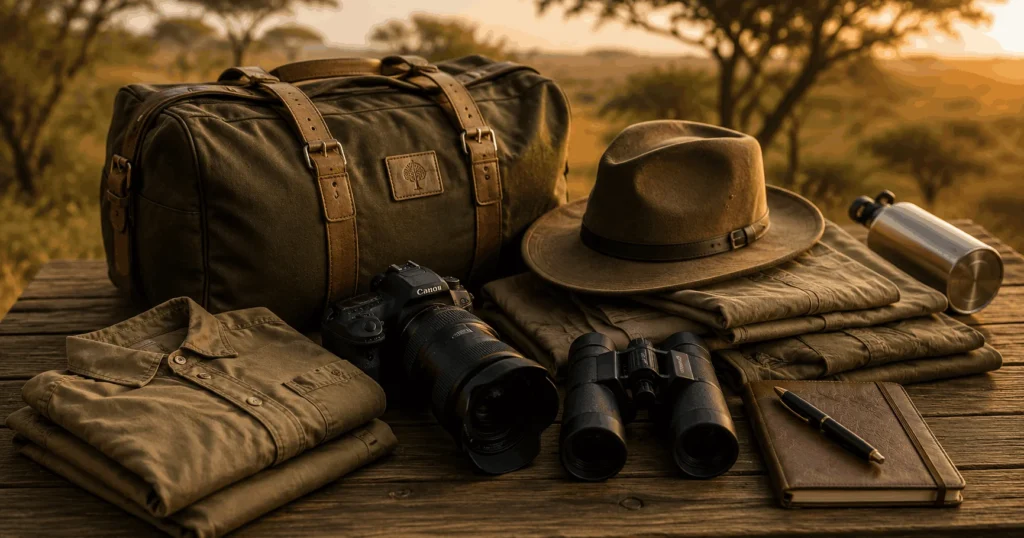
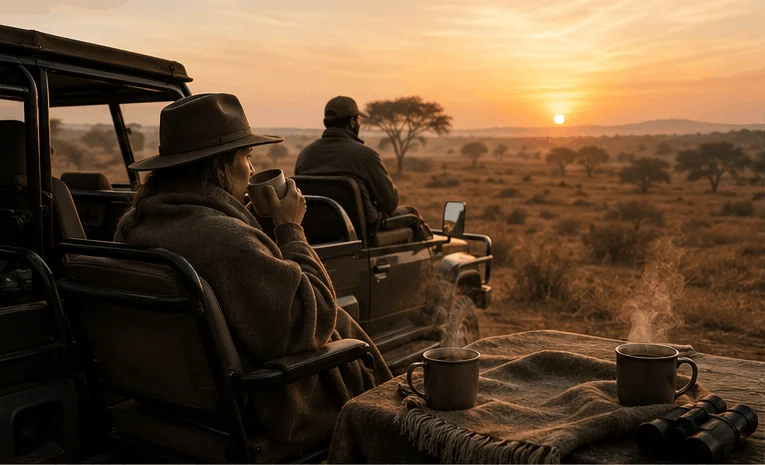
packing for Mornings and Evenings
When considering what to pack for an African Safari, a common misconception is that Africa is always hot. While midday temperatures can become warm, mornings and evenings on Safari are often surprisingly cool. This is especially true during game drives in open vehicles.
Before sunrise, temperatures may feel crisp as the vehicle moves through the bush. Many lodges provide blankets for this. A lightweight fleece, neutral jacket, or soft outer layer is usually all that is needed. These items greatly improve comfort during early departures and evening sundowners.
Layering is more practical than packing heavy clothing. Lightweight Safari clothing made from breathable fabrics keeps travellers comfortable as temperatures change without overpacking.
Neutral Safari colours such as olive, beige, khaki, stone, and muted browns are ideal. They blend naturally into the environment and photograph beautifully. These shades also avoid drawing unnecessary attention from insects or wildlife. Bright colours and stark white clothing are best avoided during game viewing activities.
Comfort and simplicity almost always outweigh excess.
Safari Health and Travel Essentials
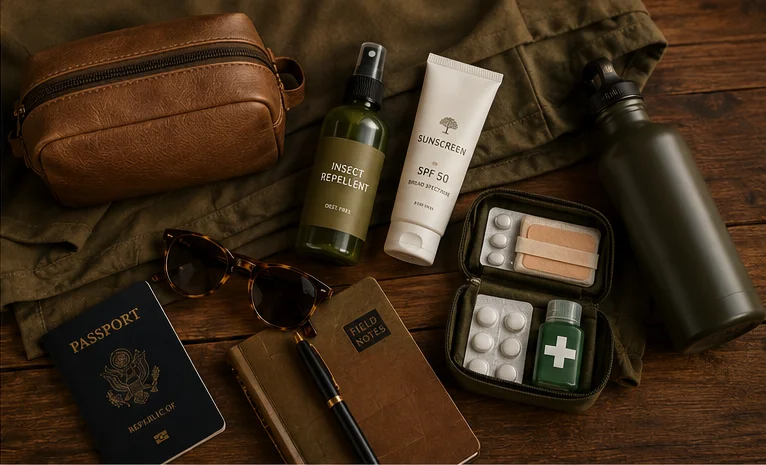
A thoughtfully prepared Safari packing list should include practical health and travel essentials. Most luxury Safari lodges offer high levels of comfort and care. Being personally prepared contributes greatly to peace of mind while travelling through remote wilderness regions.
Insect repellent, sunscreen, personal medication, hand sanitiser, and a compact first-aid pouch are sensible additions to a Safari duffel bag. Guests travelling to certain regions should consult their doctor about malaria precautions before departure, especially during warmer seasons or in lowveld environments. Often overlooked, but important to remember:
- Bring eye drops, as dust and dry winds can irritate your eyes, especially if you wear contact lenses.
- Pack a high-SPF lip balm to protect your lips from the sun and windburn.
- Bring anti-itch cream and antihistamines to treat bug bites when they occur.
- Carry a small torch or headlamp. Many camps are unfenced or use solar power at night, so having your own light helps you move around safely.
Staying hydrated is a vital packing priority. Carry a reusable water bottle for convenience and consistent hydration throughout your journey.
For photographers, prioritise bringing extra batteries, charging cables, memory cards, a power bank to charge on the trail, and dust protection for camera gear. These items help capture and protect cherished Safari moments.
Pack binoculars if possible, as they are a key Safari tool for spotting layered wildlife behaviour and distant animals that might otherwise be missed.
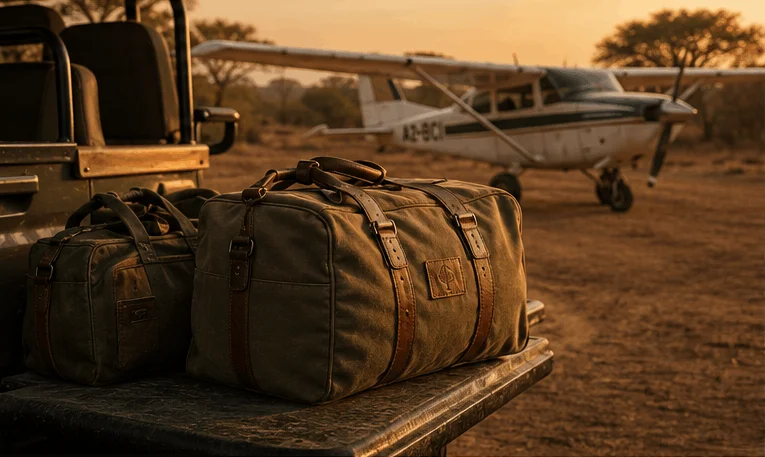
Why Soft Bags Matter on Safari
Many first-time Safari travellers are surprised to learn that hard-shell suitcases are often discouraged at remote camps and lodges.
Light aircraft transfers, compact Safari vehicles, and limited storage space within suites make soft-sided luggage a more practical option. A flexible Safari duffel bag is easier to load, store, and transport throughout multi-camp itineraries. This is especially true in Botswana Safari camps and remote bush destinations.
Most Safari luggage restrictions are not intended to inconvenience guests, but rather to accommodate the realities of wilderness travel, where logistics differ from those of conventional holidays.
The good news is that Safari travel itself encourages simplicity. Most luxury lodges offer daily laundry services, allowing guests to travel with fewer clothing items than they initially expect.
Packing lighter makes movement easier and often enhances the overall experience. There is a quiet freedom in travelling through the bush with only what is genuinely needed.
Peace of Mind Before You Travel
Preparing for a Safari should feel exciting rather than overwhelming.
Many travellers arrive concerned they may have forgotten something essential. The rhythm of Safari life quickly strips away unnecessary complication. The finest Safari experiences are rarely defined by possessions. Instead, they are shaped by atmosphere, stillness, wildlife encounters, and the privilege of spending time in extraordinary natural places.
Luxury Safari travel is ultimately about immersion rather than excess.
Most lodges are well prepared, thoughtfully staffed, and accustomed to helping guests feel comfortable in remote environments. What matters most is bringing practical clothing, a sense of curiosity, and the willingness to slow down and fully absorb the experience. Wilderness can simplify perspective in remarkable ways. Once the first sunrise game drive begins, the sounds of the bush replace the noise of ordinary life. Many travellers realise that very little is truly required beyond comfort, awareness, and presence.
And perhaps that, more than anything else, is the real essence of Safari.
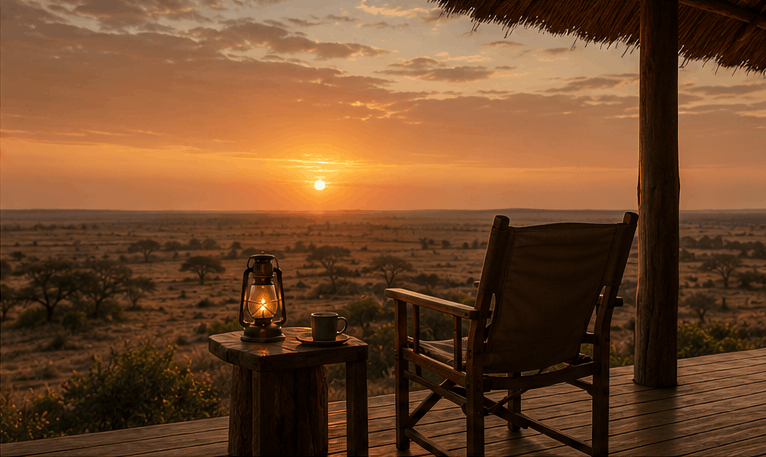
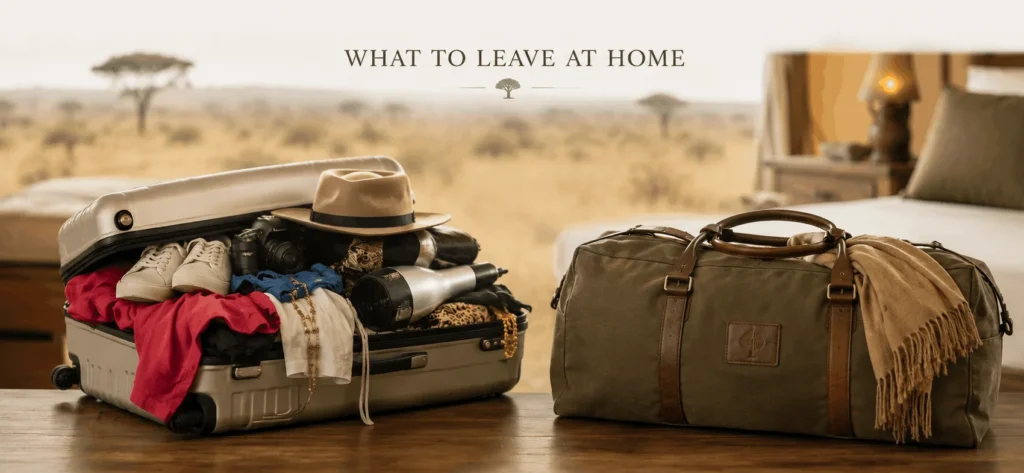
Packing for an African Safari – What Not to Pack
What to Leave at Home
When we consider what to pack for an African Safari, it is easy to overlook what to leave at home, as we are focused on essentials and comfort items. Inadvertently, we may take along items that could be illegal in some African Countries. Consider leaving these items at home:
1. PLASTIC BAGS
Many Safari hotspots, such as Kenya, Tanzania, and Rwanda, have strict policies against single-use plastic bags. Even duty-free toiletries and Ziploc bags are off-limits and could be confiscated at the airport, sometimes with hefty fines. Pack smart with reusable silicone pouches or cloth bags instead.
2. CAMOUFLAGE CLOTHING
Across much of Africa, camouflage is reserved for the military. Wearing camo as a visitor can raise eyebrows or invite unwanted attention from authorities. Stick to solid, neutral colours for a smoother journey.
3. HARD SHELL SUITCASES
If your adventure includes flights on small bush planes, soft-sided luggage is essential, as hard suitcases cannot fit in the compact cargo holds. Most travellers opt for a tough duffel bag.
4. BRIGHT OR DARK “FLY ATTRACTING” CLOTHES
- Steer clear of bright white or red clothing, as these colours pop against the landscape and may spook the wildlife you came to see.
- Skip dark blue or black, as these shades are magnets for Tsetse flies and their painful bites. Instead, blend in with tans, olives, and greys.
5. EXPENSIVE JEWELLERY
Safari is all about rugged adventure. Not only can valuables vanish in the wild, but keeping a low profile in airports and towns is much safer. Leave the expensive jewellery at home and embrace a natural, carefree style.
Final Tips on What to Pack for an African Safari
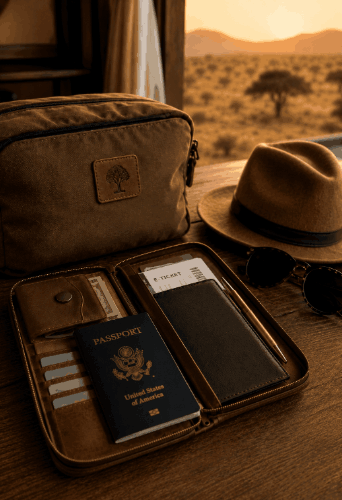
Travel Documents
Keep your Travel Documents available at all times
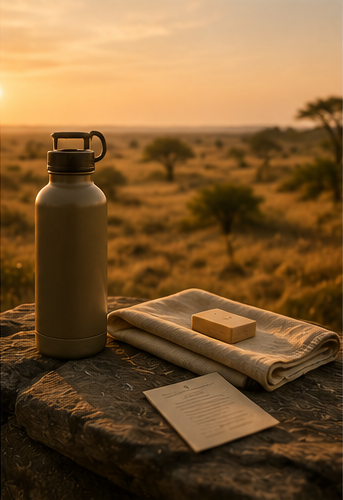
Travel Responsibly
Use eco-friendly disposable products to protect the environment and the local community
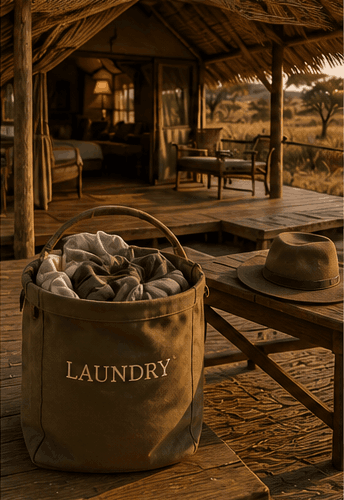
Laundry
Most Safari Lodges offer a laundry service or facilities. You can save space on the amount of clothing you need.
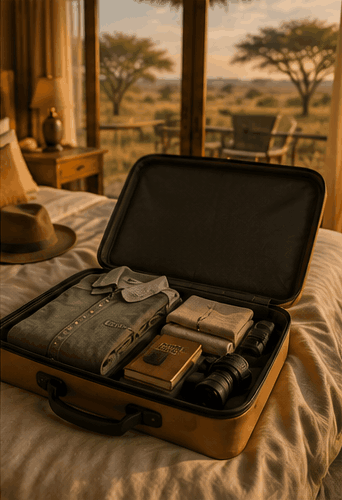
Pack Lightly
Pack lightly to save space for souvenirs and gifts upon your return journey