
SOUTH AFRICA: KWAZULU-NATAL
Thonga Beach Lodge Review
A secluded coastal retreat where Wilderness, Conservation and Community
meet on South Africa’s remote Maputaland Coastline.
About The Thonga Beach Lodge Review
This Thonga Beach Lodge review reveals an exotic retreat tucked away in the coastal dune forests of Maputaland, offering a unique Wilderness experience in South Africa. It’s not about seeing the Big Five or waiting in line to spot animals – it’s about discovering unspoiled beaches, warm Indian Ocean waters, and wildlife like nesting turtles and migrating whales. The area still looks much as it did before people came, which is special. Here, you can relax and enjoy the natural beauty without crowds or fuss.
The lodge is nestled in the iSimangaliso Wetland Park, a UNESCO World Heritage Site, between old coastal forests and the Indian Ocean. It is a place where people have worked together to care for the environment and local community while creating a luxurious destination for tourists. It’s a place where everything feels connected to nature and the people who live there. The combination of Conservation, community partnership, and sustainable tourism has made this lodge a unique gem.
Why Your Stay Matters
The money generated by tourism at Thonga Beach Lodge supports the people living nearby in Maputaland.
The Isibindi Foundation works with community groups to support local schools, education programs, and school meals for children. They also help create jobs, teach new skills, and start community gardens, all as part of their efforts to have a positive impact.
By staying at the lodge, visitors contribute to these initiatives and help improve the lives of local people.
1. The Setting
There are a few spots in South Africa as far from everything as the coast around Thonga Beach Lodge. The coastline here is really remote.
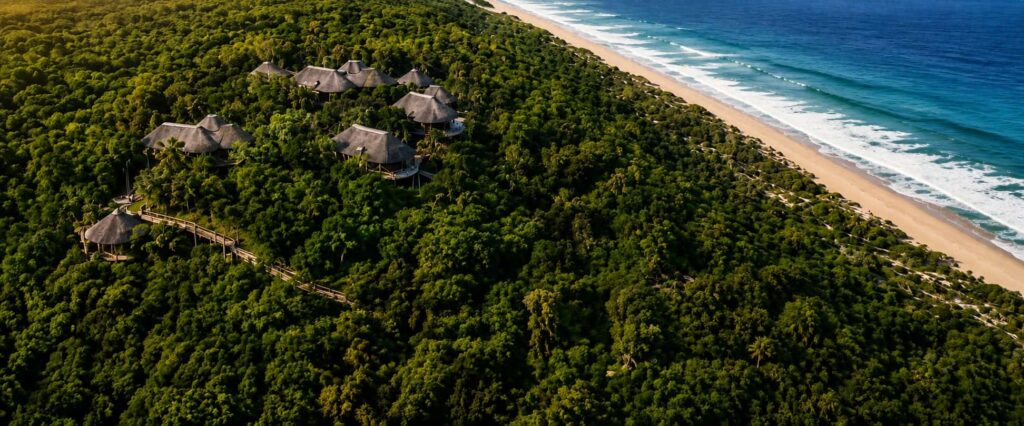
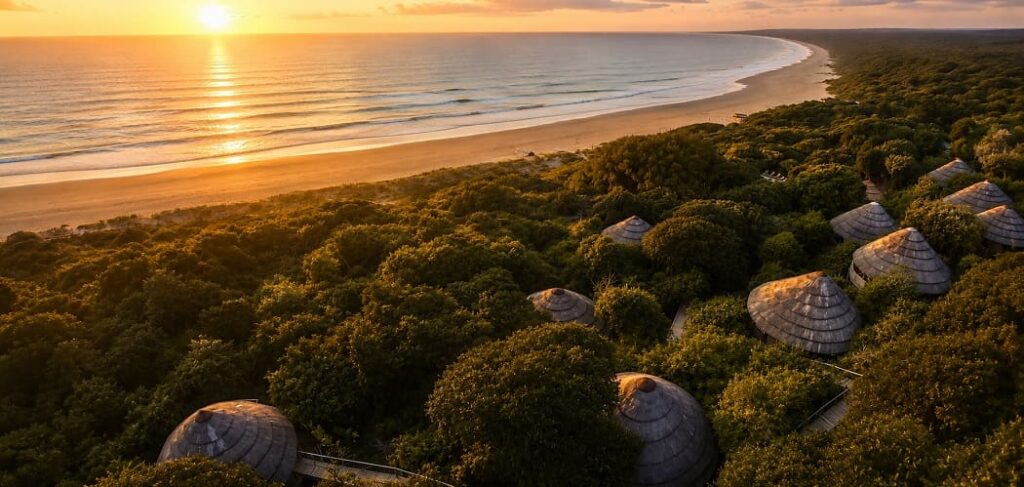
The lodge is nestled in a vast coastal dune forest, one of the largest remaining in Africa. It sits among local plants and trees, and you can walk through the forest on raised wooden paths. From above, the lodge almost disappears – its thatched roofs help it blend in with the surroundings. The surrounding environment is diverse. Forests, wetlands, lakes, beaches, coral reefs, and the warm waters of the Indian Ocean exist within a relatively small area. Guests can move from shaded forest paths to pristine beaches in a matter of minutes.
2. Suites & Design.
The accommodation reflects the same philosophy that defines the surrounding environment: comfort without intrusion.
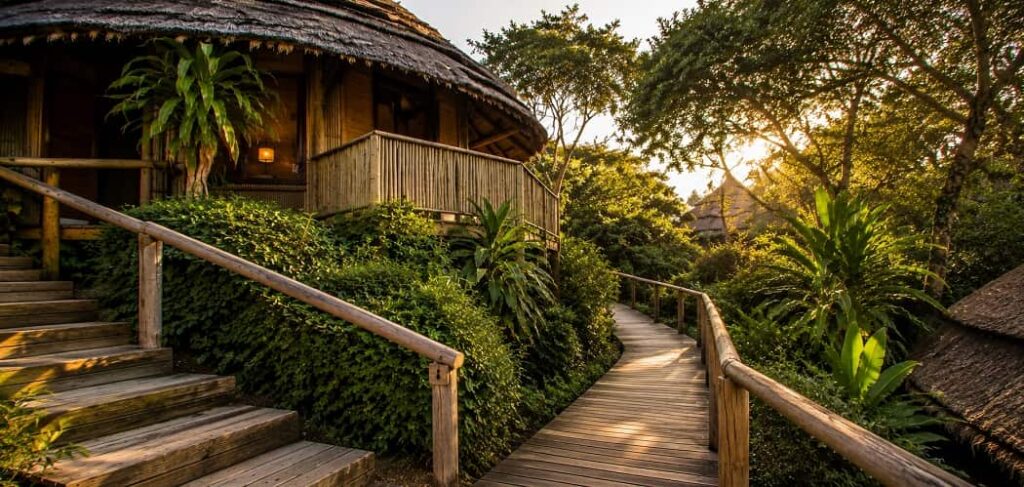
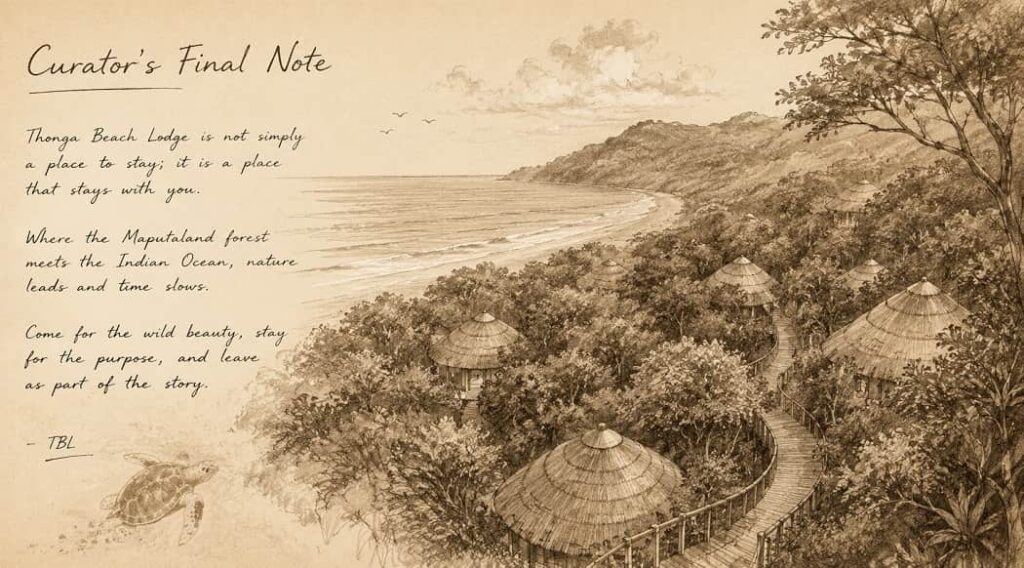
The thatched suites are built high above the forest floor and connected by wooden boardwalks, helping minimise damage to the delicate dune ecosystem. The buildings use natural materials and calming colours, allowing them to fit in with the surroundings.
The private decks offer a glimpse of the forest from above, and the interiors are simple but comfortable; they do not try to match the beautiful scenery outside.
Lodge Snapshot

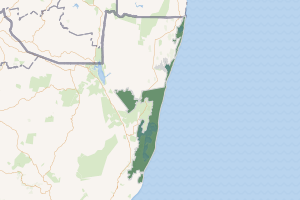
Location: Maputaland, KwaZulu-Natal, South Africa

Setting: Coastal dune forest beside the Indian Ocean

Experience: Marine life, Diving, Turtle tracking, Forest walks, Birding.

Best for: Couples, nature lovers, divers, repeat Safari travellers.

Not Ideal for: Guests seeking Big 5 game drives or ultra-luxury glamour.
Courtesy: Wikimedia Commons.
3. Wildlife Experience
Thonga Beach Lodge offers a very different kind of wildlife experience from a traditional Safari.
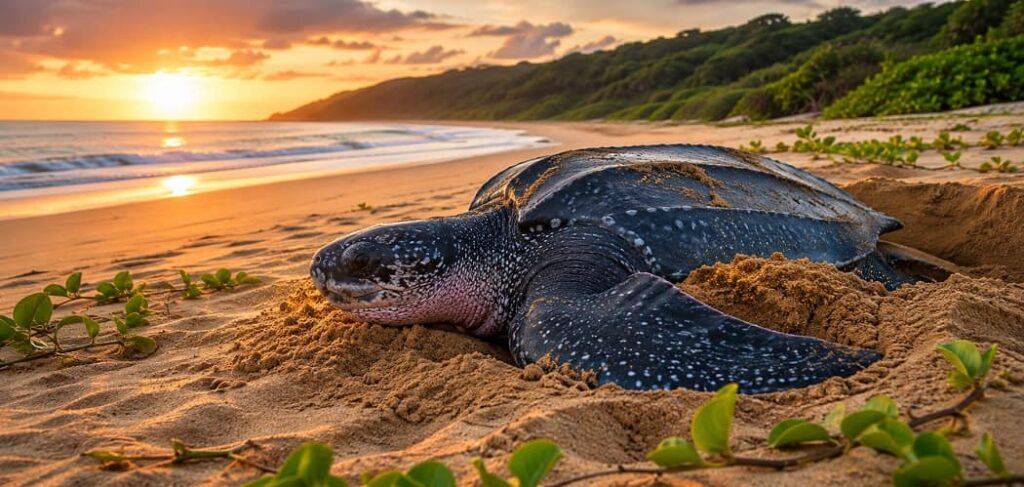
The ocean is full of life all year round. At different times of year, you might see dolphins or humpback whales migrating to warmer waters. You could also watch turtles nesting on the beach, and the coral reefs are home to a wide variety of fish.
Snorkelling and diving opportunities reveal vibrant underwater ecosystems, while guided walks introduce guests to the unique flora and fauna of the coastal forests.
Birdlife is rewarding, with forest, wetland, and coastal species contributing to impressive diversity within a relatively compact area.
In This Review
- The Setting.
- Suites and Design.
- Wildlife Experience.
- Guiding and Experiences.
- Cultural Authenticity.
- The Curaotor’s Final Note
4. Guiding & Experiences
At Thonga Beach Lodge, the main thing to do is explore and experience the place, rather than simply watching animals as you would on a typical Safari.
When you take a guided walk through the forest, you see how complex the dune forest ecosystem is. A marine excursion brings the coastal environment into sharp focus. One unforgettable experience the lodge offers is seasonal turtle tracking, where you see these incredible creatures nesting as they have for thousands of years.
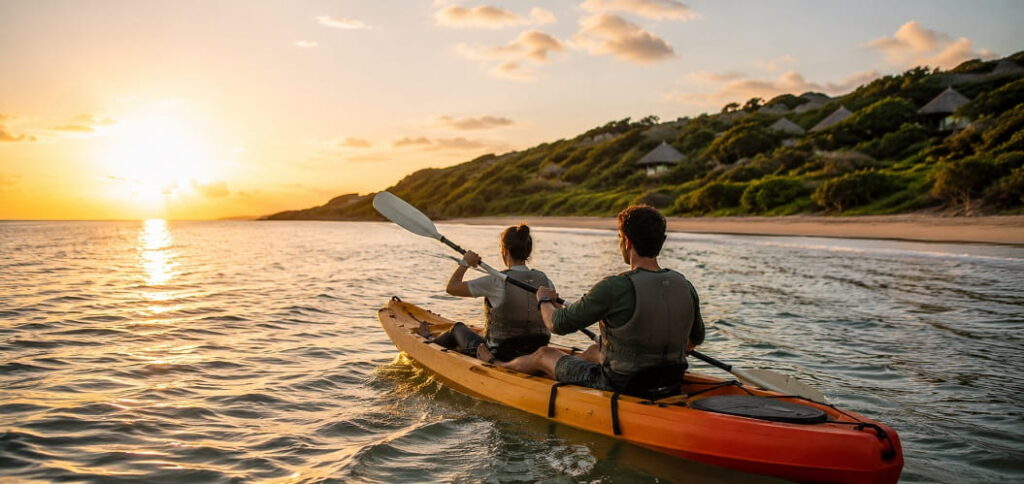
You can snorkel, dive, and kayak, or go birdwatching or take a walk on the beach.
Unlike many Safari destinations where schedules revolve around game drives, Thonga encourages a flexible pace. Guests can choose active exploration or simple relaxation, often finding value in both.
5. Cultural Authenticity
The history and culture of Maputaland are deeply intertwined with efforts to protect and preserve it.
People have lived in this area for a long time, near forests, lakes, and the coastline that many visitors now come to see. The place remains closely tied to old ways of knowing, connections between people, and a deep understanding of nature. This connection to land and water has been passed down through generations, making the region special. The community has long known how to live in harmony with the environment, and that remains important today.
One of the most encouraging aspects of Thonga Beach Lodge is that local communities are not simply observers of tourism development. Instead, they are active participants in a model designed to create shared benefits and long-term stewardship.
6. The Curator’s Final Note
More than forty years ago, I travelled through Maputaland alongside Conservation officers, field rangers, and scientists who were grappling with a difficult question.
How could these extraordinary landscapes be protected while creating meaningful opportunities for the people who call them home?
Things were uncertain back then. Tembe Elephant Park was still getting off the ground. People were exploring places that could attract tourists. Conservationists, scientists, local communities, and traditional authorities were all working together to figure things out. Still, it wasn’t clear how it would turn out, and nobody knew for sure what the future held.
Returning to Maputaland through the story of Thonga Beach Lodge is personal. What I see today is more than a place that’s doing well; it is more than that. I see evidence that a vision many people believed in has taken root, and local communities have become partners in a Conservation story that continues to unfold.