
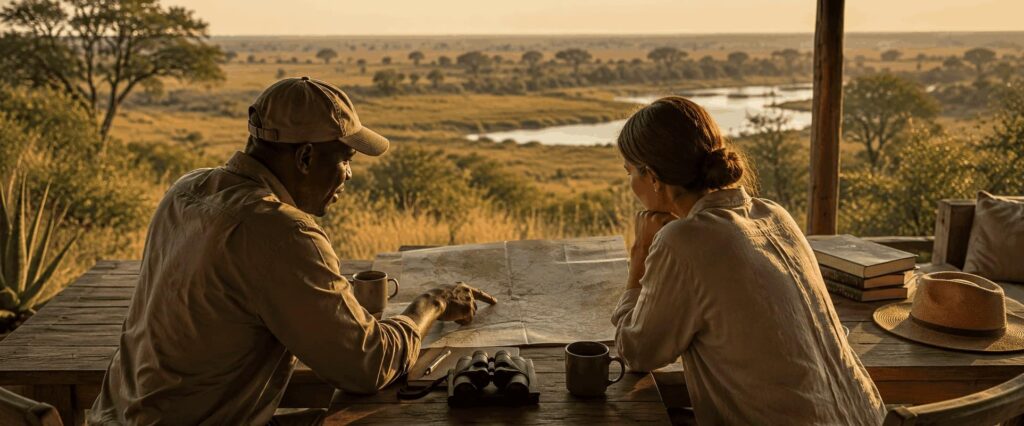
What Do We
Mean by
Cultural Authenticity?
To understand people, we must first understand place.

Cultural Authenticity
We seek to understand people and place through knowledge, respect and genuine connection.
What is Cultural Authenticity? Safari travel often speaks of “authentic cultural experiences.” Yet the phrase is rarely defined. At Africa Lodge Guide, we do not define cultural authenticity by colourful performances, staged encounters, or displays arranged for visitors.
We also do not believe authenticity requires people to remain unchanged to meet expectations of what a culture should be. Instead, we believe cultural authenticity starts with understanding and context. It is found in the relationships between people and place, revealed through knowledge, experience, history, and daily life.
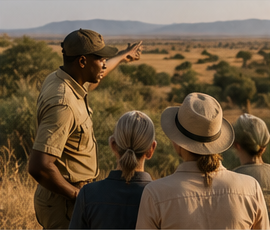
01 Beyond Performance
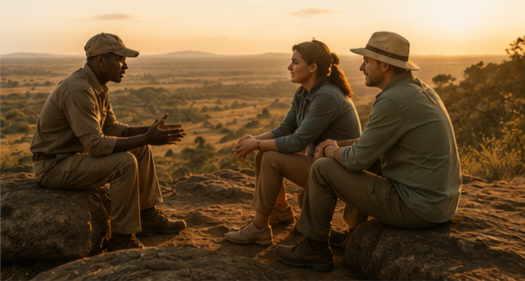
Culture is often most meaningful when it is not performed—a guide explaining the significance of a tree species. A tracker interprets the story contained within a set of footprints. A local sharing knowledge passed down through generations—a Conservation ranger explaining how wildlife and communities coexist.
These moments may seem ordinary, but they often provide deeper understanding than any staged presentation.
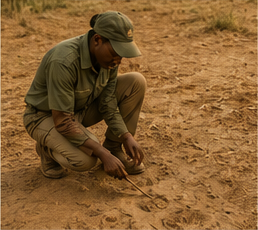
02 People Behind the Wilderness
Africa’s leading Safari destinations are not empty landscapes. They are places where people live, work, learn, and build futures. Guides, trackers, camp staff, pilots, conservationists, researchers, and community members all contribute to the story. They are part of it.
Understanding a Wilderness area requires understanding the people connected to it. Perspectives and experiences often reveal dimensions of a place that wildlife alone cannot.
04 Conservation & Community
Many of Africa’s most successful Conservation efforts depend on strong relationships between protected landscapes and neighbouring communities.
When local people benefit from Conservation through employment, education, training, and economic opportunity, wildlife gains advocates rather than adversaries. For this reason, Africa Lodge Guide considers community participation an important aspect of authenticity.
The future of Africa’s Wilderness depends not only on protecting wildlife but also on the stewardship of those who live alongside it.
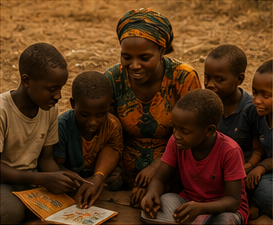
05 Learning Rather than Consuming
Meaningful travel is not just about collecting experiences. It is about gaining understanding. The most memorable moments often occur when visitors move beyond observation to appreciate the relationships that shape a landscape.
A conversation around a campfire.
An explanation of seasonal flooding, or a story passed from one generation to another.
They prompt us to look beyond first impressions and ask deeper questions about the places and the people who live there.

Understanding Place
One of the greatest benefits of travel is not the answers it provides, but the context it offers. Visiting a place means encountering the landscapes, histories, challenges, opportunities, and traditions that shape the lives of its people.
The vastness of the Kalahari.
The seasonal rhythms of the Okavango Delta.
The remoteness of northern Kenya.
The Conservation landscapes of Namibia.
These environments influence communities in ways that books, documentaries, or news reports cannot fully convey. No journey can make us experts on other people or cultures.
However, meaningful travel can provide something equally valuable: perspective. Understanding a landscape is the first step to understanding the lives shaped by it.
Place does not explain everything, but it often provides essential context.
Our Approach
When Africa Lodge Guide discusses cultural authenticity, we do not ask:
“What traditions can visitors observe?”
We are asking:
“How does this place help us better understand the people connected to it?”
Authenticity is not spectacle.
It is context.
It is a connection.
It is curiosity.
It is respect.
It is the recognition that every landscape holds stories, knowledge, and human relationships that deserve careful understanding, just as its wildlife does. Read more about our approach.
Final Reflection
Most visitors arrive in Africa with questions they may not even realise they have.
Some about landscapes, about wildlife, and some about cultures. Yet many leave with something unexpected, finding out how place shapes people.
Travelling through Africa does not make us experts on its people, cultures, or histories. Such understanding requires humility and a willingness to keep learning. However, travel can provide something equally valuable: context.
Standing within a landscape, hearing its stories, and understanding its history and challenges is the beginning of understanding the people connected to it. Place does not explain everything, but it often provides the missing piece.
Perhaps this is one of the greatest gifts of meaningful travel: not certainty, but perspective; not expertise, but understanding; not conclusions, but curiosity. And from that curiosity may emerge something deeper: a recognition of our shared humanity.
The Southern African philosophy of Ubuntu is often expressed as:
“I am because we are.”
It reminds us that our lives are shaped by our relationships with others, our communities, and the places we call home. Every meaningful journey begins with seeing a place more clearly.
It can also help us see each other more clearly.