
Duba Plains Camp
Review
Where Wilderness endures
Duba Plains Camp Review
Reflecting on Resilience in the Okavango Delta
As I write this review from Scotland, I keep thinking about one of the Okavango Delta’s most lasting Wilderness stories.
Some Safari destinations are famous for their scenery, while others are known for their wildlife. Duba Plains stands out for a different reason. It is recognised not only for what you can see, but for the ongoing ecological drama that has played out on its floodplains for generations. Here, lions and buffalo have shaped each other’s lives through a long-standing contest of strength, strategy, and survival.
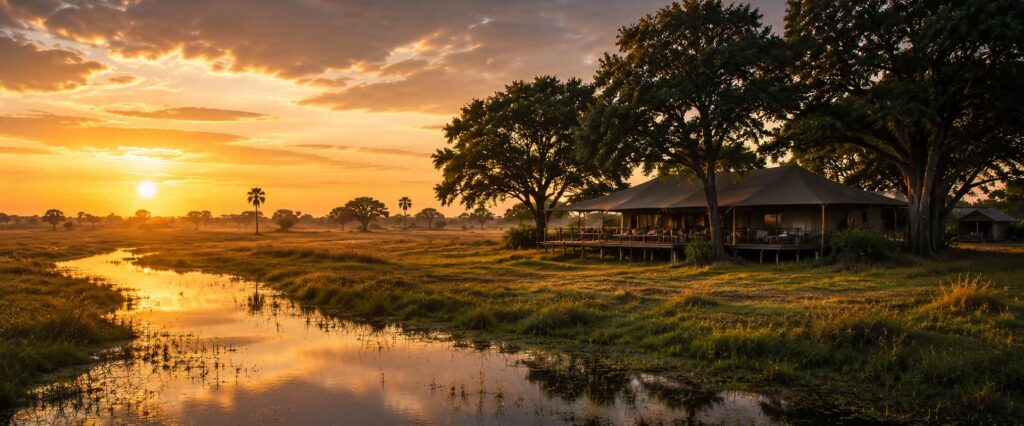
Duba Plains sits in the northern part of Botswana’s Okavango Delta, surrounded by seasonal floodplains, palm-dotted islands, and rich grasslands fed by yearly floods from far-off Angola. This creates a Wilderness that feels both lush and wild, with plenty of wildlife and a true sense of remoteness.
In this review, I examine whether Duba Plains is not just a luxury Safari spot but also a place that reveals more about resilience, adaptation, and the enduring rhythms of nature.
Quick OVERVIEW

LODGE STYLE
Classic Safari Luxury

LOCATION
Northern Okavango Delta, Botswana

ATMOSPHERE
Remote, Wild, Immersive

SAFARI RHYTHM
Game Drives Focused on Animal Behaviour

KNOWN FOR
Predator Encounters and Floodplain Wildlife

IDEAL STAY
3 – 5 Nights

The Setting
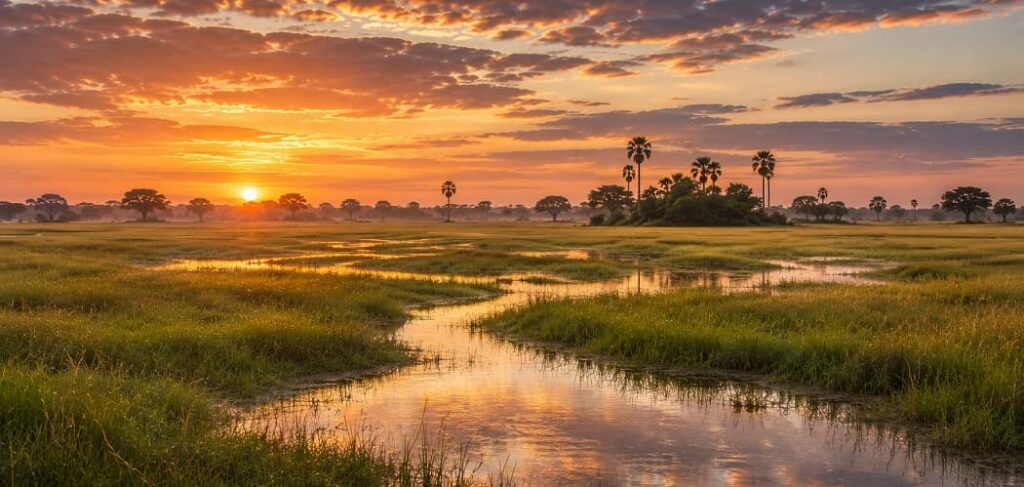
Duba Plains sits in a unique part of the Okavango Delta, where seasonal floodplains meet wooded islands and wide grasslands. The landscape feels vast, stretching out to distant horizons marked by palms and old trees that have seen many cycles of flood and drought.
Unlike parts of the Delta where channels are the main feature, Duba is known for its open floodplains. These grasslands are key grazing areas for large herbivores, especially buffalo, whose movements are central to the region’s ecology.
The yearly flood shapes this Wilderness. It arrives months after the rains in Angola, changing the landscape, feeding plants, and supporting wildlife during the dry season. As the conditions shift, so do the movements of the animals that rely on these rich habitats.
What stands out to me about Duba is its feeling of permanence. The flood comes, grasses grow, herds move, and the old patterns between predator and prey go on. Visitors are not just seeing a Wilderness; they are watching a process that has lasted for generations.

Suites & Design
Duba Plains blends classic African Safari traditions with the comfort and style you expect from a modern luxury camp.
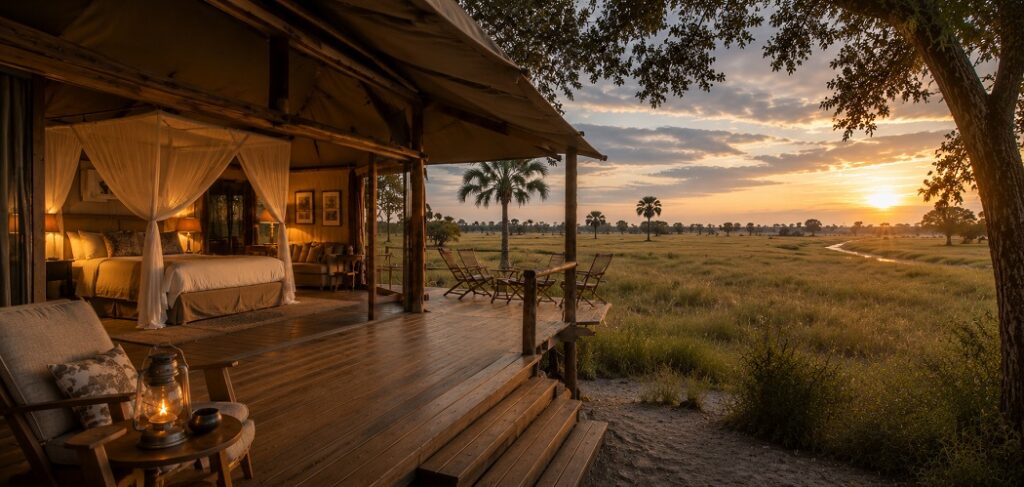
The raised canvas suites overlook the floodplains, making you feel closely connected to the landscape. Large decks, natural materials, and thoughtful furnishings invite guests to stay engaged with the Wilderness during their visit.
Big shade trees around the camp add a lot to its atmosphere. Their wide canopies soften the strong African sun and give a feeling of lasting presence in this mature Wilderness. The camp seems to fit naturally into its surroundings, rather than standing out.
Inside, the camp mixes elegance with practicality. Rich textures, handmade details, and nods to Safari heritage make the spaces feel both stylish and inviting. Even with all the luxury, the main focus stays on the landscape outside.
I like how Duba Plains balances comfort and authenticity. It offers a luxury experience without losing its strong connection to the Wilderness, which makes it special.

Wilderness Experience
Duba Plains is known worldwide for its wildlife viewing, but its appeal goes beyond just great sightings. What makes this part of the Okavango Delta special is the chance to watch animal behaviour in a landscape that shapes every part of life here.
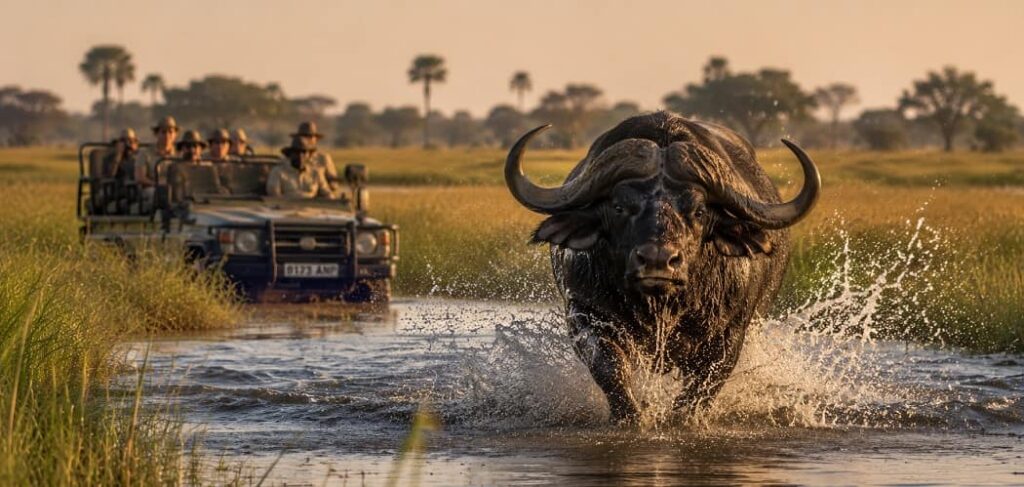
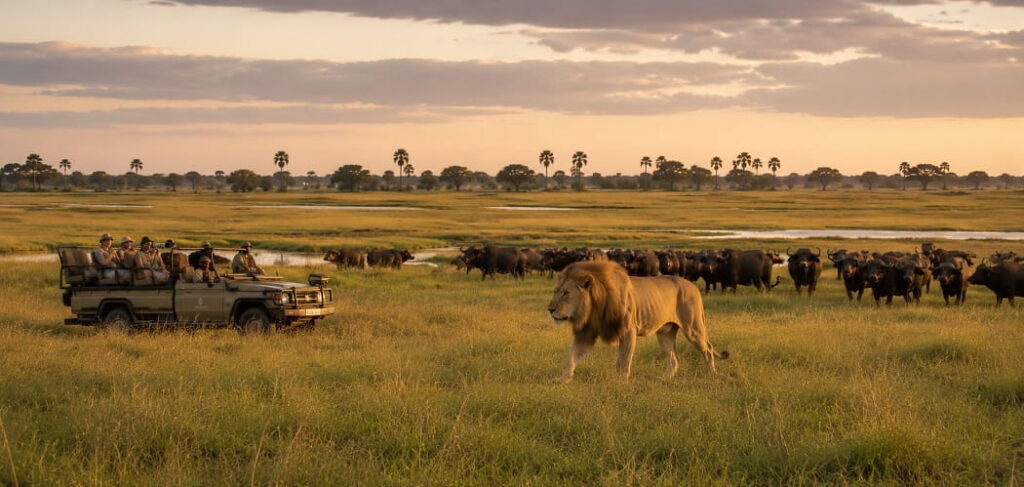
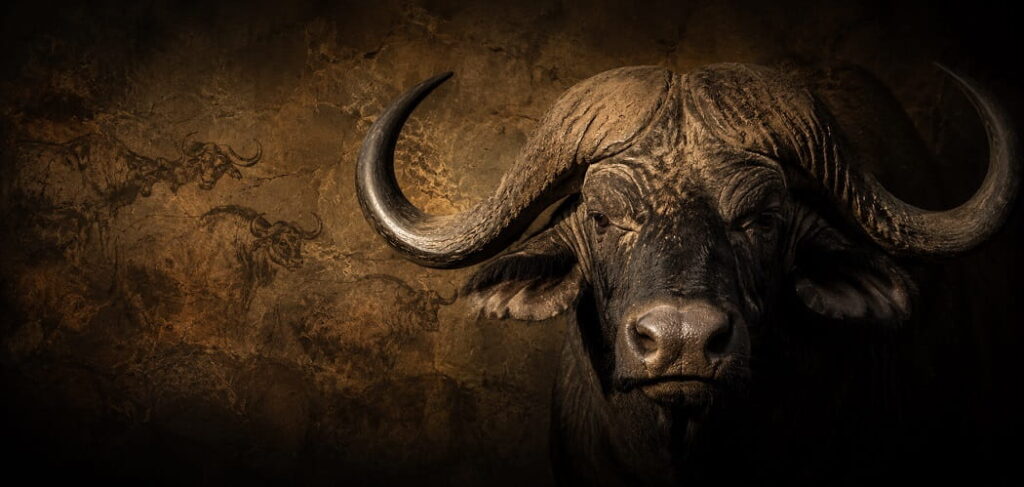
The floodplains support substantial herds of buffalo, whose movements have become synonymous with Duba itself. Drawn to rich grazing created by seasonal flooding, these animals play a central role in the ecosystem. Their presence influences predator behaviour, creates opportunities for dramatic wildlife encounters, and contributes to the ecological balance that defines the region. They are perhaps the most celebrated inhabitants of Duba Plains. For generations, prides have adapted to hunting within this watery environment, developing behaviours uniquely suited to the challenges presented by floodplains and large buffalo herds. Their interactions have become one of Africa’s most compelling wildlife stories, illustrating the constant tension between strength, strategy, and survival.
But the Wilderness here is more than just its most famous animals. Elephants, leopards, antelope, birds, and many smaller species all add to the area’s richness. Every sighting is part of a bigger picture, reminding visitors that the Wilderness is a web of connected relationships, not just a list of animals.
What I like about Duba is that the wildlife truly feels wild. Every encounter feels earned, not promised, and the landscape itself plays a big role in each Safari experience.

Guiding & Safari Rhythm
A Safari at Duba Plains is as much about watching as it is about moving. The floodplains set a slower, thoughtful pace, allowing guides and guests to really take in the stories unfolding in the landscape.
Game drives here are about more than just finding animals—they’re about understanding their behaviour. Watching a buffalo herd can reveal the subtle ways they interact. Seeing a lion often leads to learning about the clever strategies predators use to hunt in the floodplains. This experience rewards both patience and curiosity.
The guides are key to bringing these stories to life. Their knowledge of animal behaviour, the seasons, and local ecology adds important context, turning each sighting into a meaningful experience. Instead of just showing single moments, they help you see the bigger patterns that link animals, their habitat, and water.
This creates a Safari rhythm that feels truly immersive. The focus isn’t on checking animals off a list, but on building a deeper appreciation for the forces that shape life in the Delta. This way, visitors are encouraged to notice the less obvious, more subtle dynamics happening all around them.
In many ways, Duba Plains offers a Safari experience that values reflection as much as it does excitement. It invites guests to slow down, watch closely, and appreciate the Wilderness around them.

Conservation & Legacy
Few Safari destinations are as closely linked to Conservation as Duba Plains. Decades of observation, research, filmmaking, and advocacy here have greatly added to our understanding of African wildlife and the ecosystems that support them.
Thanks to the work of conservationists, guides, researchers, and local communities, this remarkable Wilderness continues to thrive. Their efforts go beyond saving single species; they focus on keeping the whole ecosystem healthy and resilient.
The yearly flood is still at the heart of this story. Without water from faraway Angola, the floodplains would become less productive, wildlife numbers would drop, and the delicate balance that defines the Delta would change. Protecting Duba means looking after not just the land and animals, but also the natural systems they rely on.
Responsible tourism supports these efforts by generating long-term economic value for Conservation areas. This shows that healthy ecosystems have lasting value beyond just their immediate resources.
Duba Plains reminds us that Conservation isn’t just about saving the past. It’s about making sure future generations have healthy ecosystems that can support the amazing variety of life we see today.

Final Reflection
After thinking about Duba Plains, what stays with me isn’t a single special sighting or moment, but a deep respect for the natural world’s resilience.
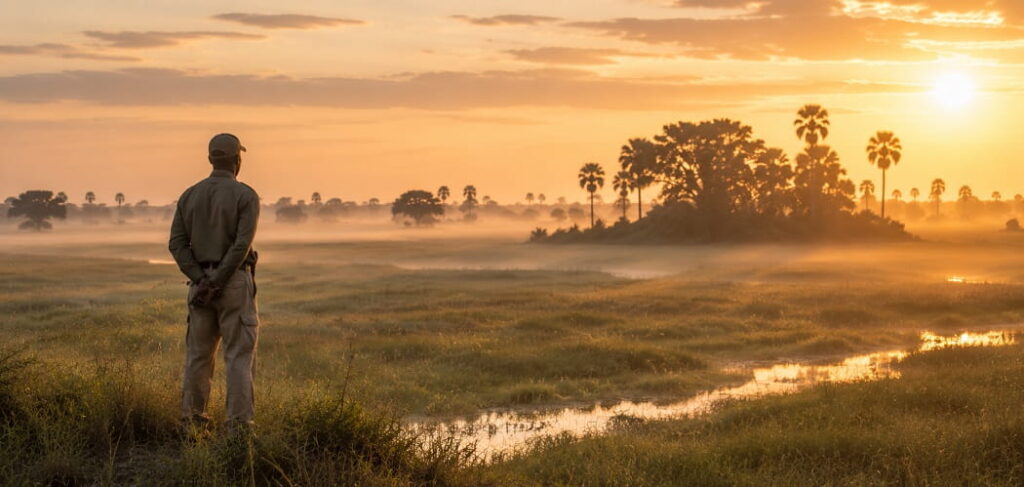
Life on these floodplains follows rhythms much older than any visitor. Water comes, grass grows, herds move, and predators adjust. Generation after generation, this cycle has lasted for centuries. While single moments may stand out, it’s the ongoing process that gives the landscape its real meaning.
Duba Plains lets you see this resilience at its best. Here, the Wilderness isn’t still or fragile. It’s lively, adaptable, and impressively persistent. Every flood, migration, and encounter between predator and prey adds to a larger story that continues long after we leave.
For travellers looking for a meaningful Safari, Duba offers more than just great wildlife viewing. It offers a glimpse into the enduring forces that shape one of Africa’s greatest Wilderness areas.
Perhaps that is Duba’s greatest lesson. True Wilderness is not defined by its drama, but by its ability to endure.
Africa Lodge Guide Perspective
Wilderness
SETTING
A landscape shaped by water and time.
Duba Plains occupies a remarkable corner of the Okavango Delta where seasonal floodplains, palm islands, and distant horizons combine to create one of Botswana’s most evocative Wilderness settings.
WILDLIFE
EXPERIENCE
Where resilience and survival unfold daily.
From vast buffalo herds to the renowned lion prides that hunt them, Duba Plains offers some of Africa’s most compelling wildlife interactions in a rich, productive ecosystem.
LODGE
CHARACTER
Classic Safari elegance in the heart of the Delta.
Raised canvas suites blend comfort and authenticity, offering expansive views across the floodplains while remaining deeply connected to the surrounding Wilderness.
GUIDING & SAFARI RHYTHM
Observation rewarded by patience.
The Safari experience at Duba encourages guests to slow down and appreciate wildlife behaviour, ecological relationships, and the subtle rhythms that define life on the floodplains.
CONSERVATION & LEGACY
Protecting a Wilderness for future generations.
Conservation at Duba extends beyond individual species, focusing on the preservation of the ecological processes, habitats, and landscapes that sustain the Okavango Delta.

CULTURAL
AUTHENTICITY
Beyond its wildlife and scenery, Duba Plains offers insight into the traditions, knowledge, and stewardship that have helped shape Botswana’s relationship with the Okavango Delta for generations.
A Note From the Curator
If Vumbura invited us to reflect upon the forces that shape the Wilderness, Duba Plains encourages us to consider the qualities that allow it to endure.
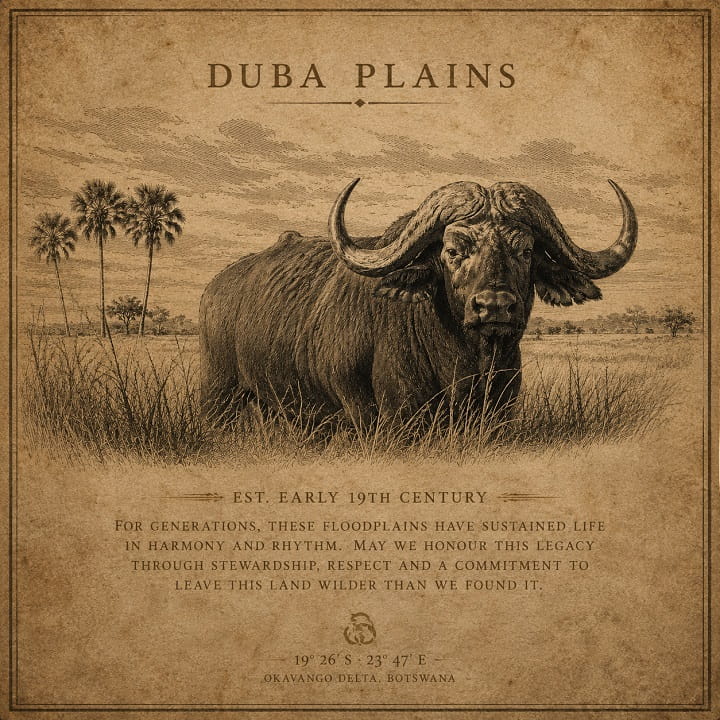
Across these floodplains, life unfolds according to rhythms far older than any visitor. Water arrives from distant highlands. Grasses emerge from fertile soils. Herds move across the landscape. Predators adapt to changing conditions. Generation follows generation in a cycle that has persisted for centuries.
It is tempting to focus solely on the dramatic moments for which Duba is renowned. Yet the true significance of this Wilderness lies not in individual encounters, but in the resilience of the ecosystem itself—the flood returns. Wildlife responds. The landscape renews itself once more.
To spend time here is to gain a deeper appreciation for the enduring relationships that sustain the Okavango Delta. Duba reminds us that Wilderness is not merely something to be admired, but something to be understood, respected, and protected.
If you have enjoyed this Duba Plains Camp review, I invite you to explore our other Safari lodge reviews, destination guides, and articles celebrating Africa’s remarkable Wilderness areas and meaningful Safari experiences.
Until the next journey,

The Curator
AFRICA LODGE GUIDE