
Jack’s Camp Review
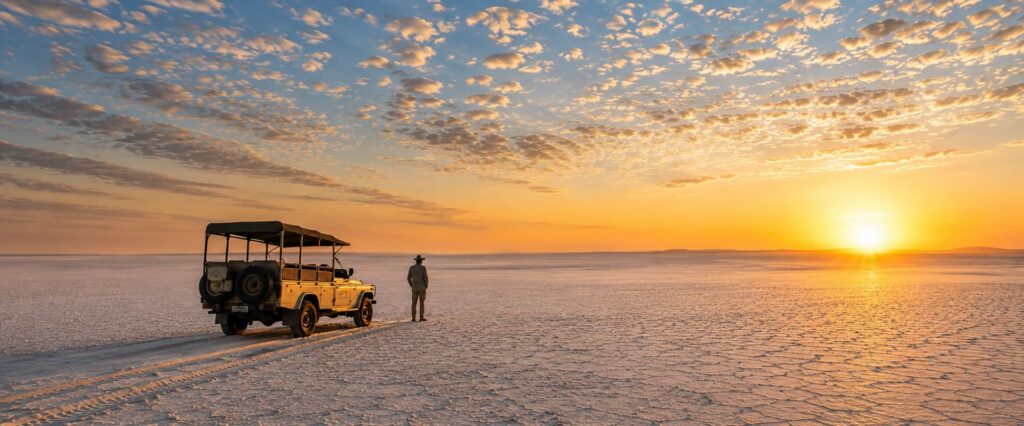
Where the memory of an ancient lake
meets the silence of the Kalahari.
Jack’s Camp Review: Reflecting on Wonder in the Kalahari
Writing the Jack’s Camp Review soon reminded me how different a Safari experience is here.
If the Okavango Delta tells its story through water, then the Makgadikgadi tells its story through time.
At first glance, the landscape appears almost empty.
But beneath these wide horizons is the memory of one of Africa’s great prehistoric lakes, which once covered much of Botswana before slowly becoming the salt pans and grasslands we see now.
It is here, on the edge of this ancient landscape, that Jack’s Camp has built its reputation.
Unlike many Safari lodges that focus mainly on wildlife, Jack’s Camp invites visitors into a bigger story. Here, geology, archaeology, anthropology, astronomy, and the lasting connection between people and place all play a part.
The result is a Safari experience unlike any other. In these reflections, I ask a key question: Does Jack’s Camp succeed not just as a luxury Safari, but also as a way to understand one of Botswana’s most remarkable landscapes?
Quick OVERVIEW

STYLE
Vintage safari elegance and character

LOCATION
Makgadikgadi Pans, Botswana

ATMOSPHERE
Silence & Curious Travellers Seeking Perspective

SAFARI RHYTHM
Pans exploration and cultural encounter

KNOWN FOR
Meerkats, brown hyena, desert wildlife

IDEAL STAY
3 – 4 Nights

The Setting
An Ancient Lakebed Beneath Endless Skies.
The Makgadikgadi is often imagined as a landscape of emptiness, yet the reality is far more complex.
Once part of one of Africa’s largest prehistoric lakes, this vast region continues to be shaped by seasonal cycles of water and renewal. Following the rains, portions of the ancient lakebed fill with shallow water, creating temporary wetlands that attract wildlife and transform the surrounding grasslands. What appears barren from a distance becomes a constantly changing mosaic of habitats.
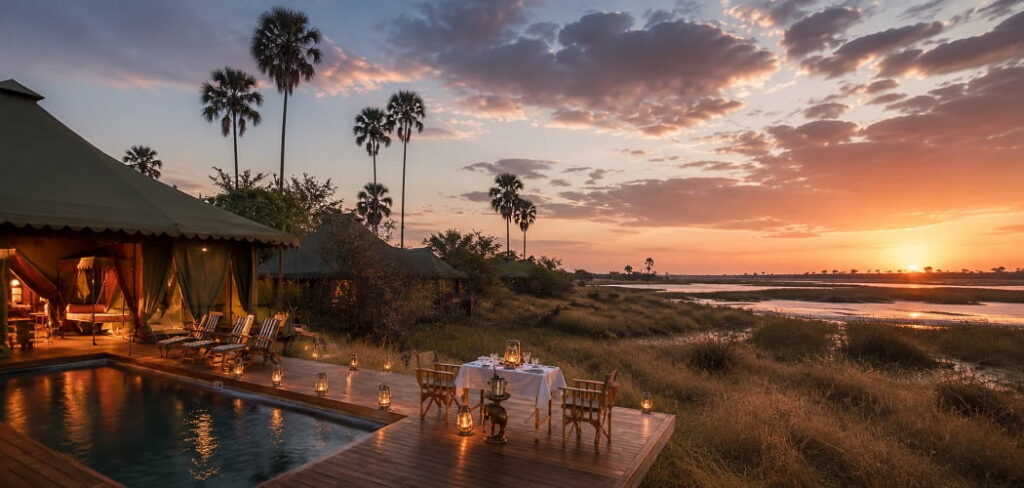
Jack’s Camp occupies a palm-dotted oasis on the edge of this remarkable environment, where seasonal water, open grassland, and the great salt pans converge beneath immense African skies.
The sense of space remains extraordinary. Horizons stretch seemingly without end, while shifting light and weather continually reshape the landscape. Yet the true character of the Makgadikgadi lies not in emptiness, but in contrast: water and salt, abundance and scarcity, movement and stillness.
Standing here, visitors encounter not only one of Botswana’s most distinctive Wilderness areas but also a landscape that slowly reveals its complexity, rewarding those willing to look beyond first impressions.
It is a place where geography, ecology, and deep time remain inseparably connected.

Suites & Design
Vintage Elegance Inspired by Exploration
Jack’s Camp has long been celebrated for its distinctive approach to safari hospitality, and its recent refurbishment has strengthened rather than diminished that identity.
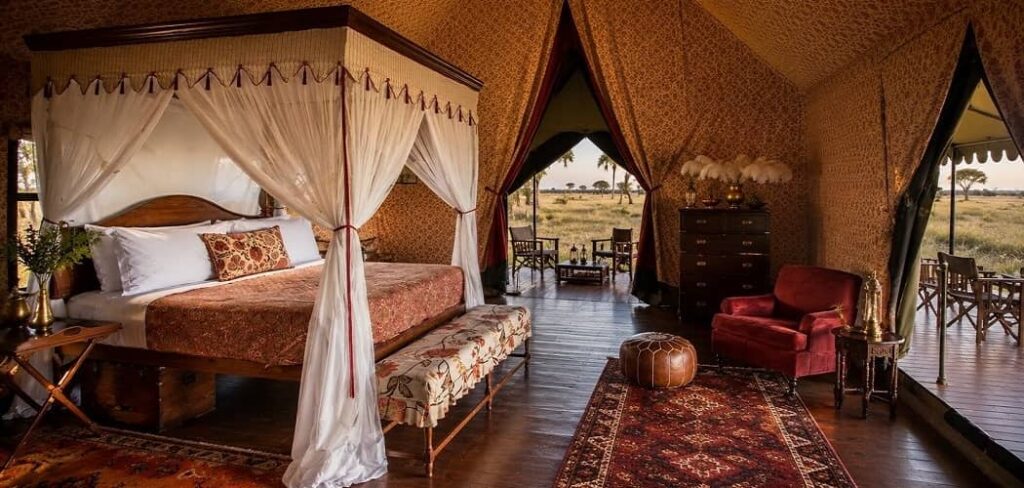
The spacious canvas suites combine the romance of a traditional safari camp with a richly layered interior aesthetic inspired by both African and Eastern design influences. Patterned fabrics, handcrafted furnishings, antique pieces, and vibrant textiles create an atmosphere that feels simultaneously luxurious, eclectic, and deeply personal.
Unlike many contemporary safari lodges that favour minimalist design, Jack’s Camp embraces character. Every suite feels carefully curated, balancing comfort with a sense of discovery. The result is an environment that reflects the spirit of travel and exploration while remaining firmly rooted in the surrounding landscape.
Large tented living spaces open onto views of grasslands and palms, allowing guests to remain connected to the remarkable setting beyond. The experience is one of immersion rather than separation, where the comforts of the camp complement rather than compete with the wilderness.
The design succeeds because it feels authentic to the destination. Just as the Makgadikgadi reveals unexpected complexity beyond first impressions, so too does Jack’s Camp. Beneath its elegant canvas exterior lies a distinctive sense of place that sets it apart from almost every other safari lodge in Botswana.

Wilderness Experience
Unexpected Wildlife Adapted to Extremes
When visitors arrive from the Okavango Delta, they might at first wonder where all the wildlife has gone. But before long, the Kalahari starts to show what makes it special.
Soon enough, the Kalahari begins to show its hidden wonders.
Instead of offering endless wildlife at every turn, the Makgadikgadi encourages visitors to slow down and watch closely. Here, every animal has learned to survive in harsh conditions, making the safari experience very different from that in Botswana’s well-known floodplains.
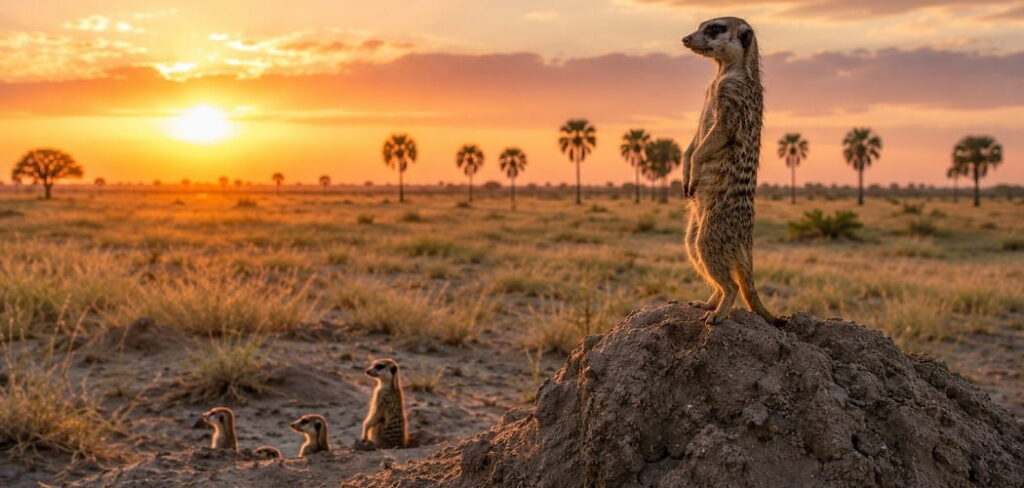
One of the highlights at Jack’s Camp is visiting the friendly meerkat colonies. In the early morning, guests can watch the meerkats emerge from their burrows and soak up the first sunlight before they start looking for food. These curious animals sometimes come close to visitors, even climbing onto a shoulder or head to get a better view.
It’s important that these encounters are always respectful and gentle. The meerkats are still wild, but because they are used to people, guests can watch them up close without disturbing them.
Besides meerkats, the area is home to many other desert animals, like brown hyenas, bat-eared foxes, aardwolves, and even herds of zebra and other plains animals that pass through at certain times of year. You might not see as many animals as in the Delta, but the sightings here often feel more personal and special.
The wildlife experience at Jack’s Camp is ultimately less about quantity. At Jack’s Camp, the wildlife experience is really about discovery, not just numbers. Visitors are encouraged to take their time, look closely, and admire how life thrives in one of Africa’s toughest places.

Guiding & Safari Rhythm
Discovery Shaped by Curiosity and Space
Guided tours at Jack’s Camp are quite different from a typical Safari.
The experience sparks curiosity. Visitors ask questions they never expected to consider.
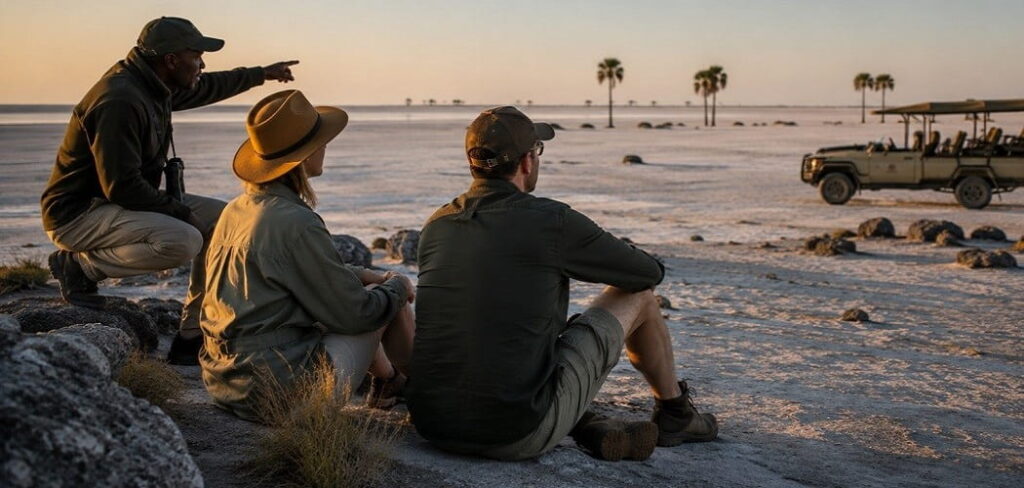
The Safari becomes an exploration, a journey of ideas as much as a search for wildlife. Protecting Fragile Kalahari Ecosystems Together.
Guiding at Jack’s Camp extends beyond traditional game drives. Meerkat encounters, interpretive walks, salt-pan explorations, archaeological discoveries, cultural experiences, and night-sky observations combine to create a Safari centred as much on curiosity as wildlife.
The Makgadikgadi is one of the most unique natural places in Botswana, and protecting it takes careful management. Tourism helps protect these landscapes and also creates opportunities for nearby communities. Jack’s Camp is part of larger efforts to protect both the environment and local culture.
The future of this region depends on keeping this balance.

Conservation & Legacy
Protecting a Landscape of Time and Space
The Makgadikgadi is one of Botswana’s most unusual Conservation landscapes.
Unlike wildlife-rich floodplains or dense Safari regions, its value lies equally in its geological history, ecological diversity, seasonal migrations, and cultural heritage.
The vast salt pans, surrounding grasslands, and desert ecosystems support a surprising range of wildlife adapted to extreme conditions. Seasonal rains transform portions of the landscape, attracting one of Africa’s lesser-known zebra migrations, while species such as brown hyena, meerkats, and bat-eared foxes thrive in this challenging environment.
Protecting such a landscape requires more than safeguarding wildlife alone. It also involves preserving fragile ecosystems, supporting sustainable tourism, and recognising the cultural significance of a region that has sustained human communities for generations.
Tourism plays an important role in maintaining this balance. By creating employment opportunities, supporting local economies, and encouraging stewardship of the natural environment, camps such as Jack’s Camp contribute to the long-term viability of both Conservation and community development in the Makgadikgadi region.
In many ways, Conservation here is not simply about protecting what exists today. It is about ensuring that future generations can continue to experience one of Africa’s most remarkable and ancient landscapes.
Cultural Authenticity
Understanding Life in the Kalahari
The Makgadikgadi is not only a landscape of geological wonder; it is also a place shaped by generations of human experience.
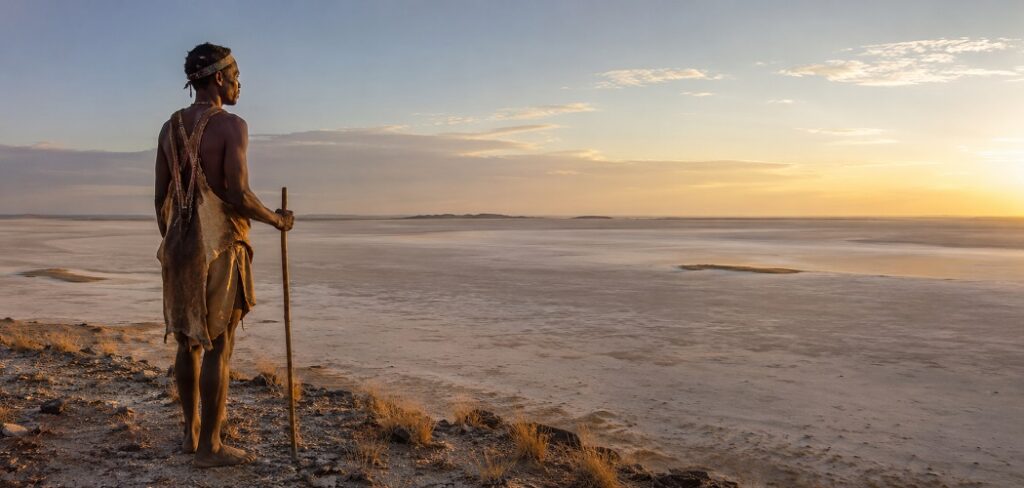
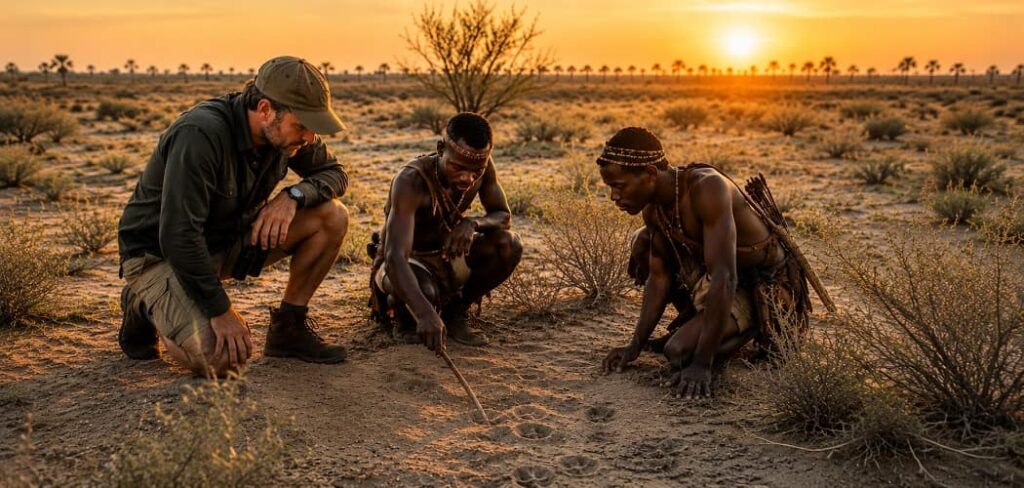
Among the region’s most significant cultural legacies is that of the San people, whose deep understanding of wildlife, tracking, plants, and survival in arid environments reflects a remarkable relationship with the Kalahari. Their knowledge forms part of a broader human story that has unfolded across these landscapes for thousands of years.
Visitors may also gain insight into the wider communities that call this region home, including modern Batswana settlements whose lives remain connected to the rhythms of the desert and surrounding grasslands.
Rather than presenting culture as performance, Jack’s Camp encourages an appreciation of the knowledge, resilience, and history that have shaped life in one of Africa’s most distinctive environments. In this way, the experience remains rooted in understanding rather than display.
Through this understanding, the landscape becomes more than scenery. It becomes a place of human stories and natural wonders.

Final Reflection
A Safari Measured by Perspective
Jack’s Camp stands out because it offers something rare today: a strong sense of place and a deeper understanding of the landscape.
The vastness of the pans.
The depth of time.
The silence.
The stars.
The stories are carried within the landscape.
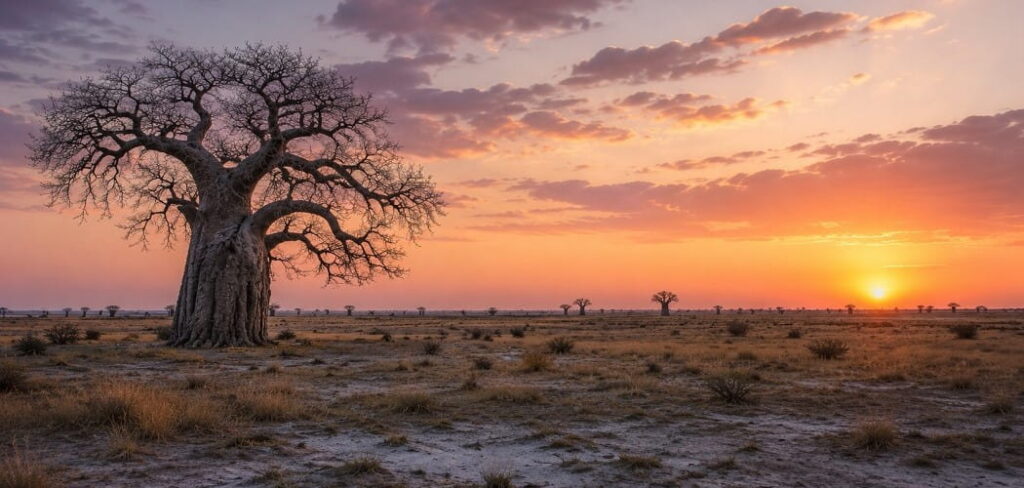
Together, these things create an experience that feels bigger than a typical Safari. Visitors may arrive seeking wildlife.
Many leave thinking about their own place in a much older story.
Africa Lodge Guide Perspective
WILDERNESS
SETTING
Ancient lakebed beneath endless horizons.
WILDLIFE
EXPERIENCE
Unexpected wildlife adapted to extremes.
LODGE
CHARACTER
Vintage elegance inspired by exploration.
GUIDING & SAFARI RHYTHM
Discovery shaped by curiosity and space.
CONSERVATION & LEGACY
Protecting fragile Kalahari ecosystems together.

CULTURAL
AUTHENTICITY
Understanding life in remote landscapes.
A Note From the Curator
Some safari destinations impress through abundance.
Jack’s Camp impresses through absence.
The absence of crowds.
The absence of noise.
The absence of distractions.
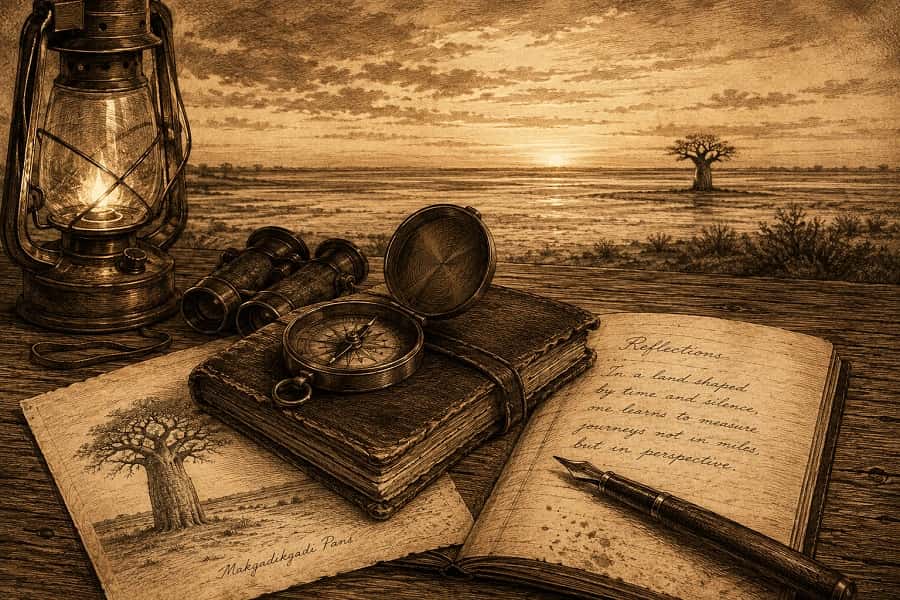
In their place, visitors encounter space, silence, and an ancient landscape that invites contemplation.
Here, the horizon feels endless.
The stars appear brighter.
Time seems to move differently.
Yet the Makgadikgadi is not an empty Wilderness. Instead, it is a place where people have crossed these pans for thousands of years, adapted to their challenges, learned their rhythms, and built lives within this remarkable environment.
For thousands of years, people have crossed these pans, adapted to their challenges, learned their rhythms, and built lives within this remarkable environment.
Their stories form part of the landscape every bit as surely as the salt flats, grasslands, and distant horizons.
Perhaps that is Jack’s Camp’s greatest gift.
It reminds us that wonder does not arise only from wildlife or scenery, but from a deeper appreciation of the relationships between people, place, and time.
It offers luxury, certainly. Wildlife, undoubtedly.
But beyond those things, Jack’s Camp offers something increasingly rare: the chance to pause, reflect, and consider one’s place within a story far older and larger than oneself.
And perhaps that is the true gift of the Makgadikgadi; not simply the chance to see a remarkable landscape, but the chance to depart with a different perspective than the one with which you arrived.
In the end, every meaningful journey begins with seeing a place more clearly. Sometimes, it also helps us see ourselves more clearly.
The Curator,